Love Icon Heartbeat Clipart: A Designer's Guide to Dynamic Visuals
Understanding the Visual Language of a Heartbeat
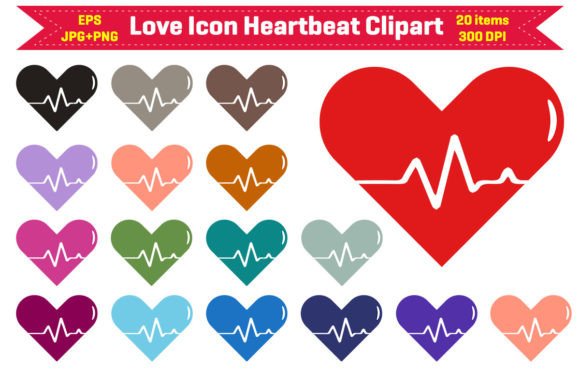
When you first encounter a piece of design work that uses Love Icon Heartbeat Clipart, you are immediately met with a specific visual rhythm. This isn't just a static heart shape; it's an icon that incorporates the familiar, pulsating line of an EKG or heart monitor. This simple addition transforms a universal symbol into a narrative about vitality, urgency, and life. The visual personality is one of modern energy and emotional resonance. It feels clean, digital, and purposeful, often rendered in a style that balances between minimalist iconography and expressive illustration. Its appeal lies in its ability to communicate a complex idea—love as a living, beating force—in a single, glanceable graphic.
The clipart typically features a bold, solid heart silhouette with the heartbeat line tracing across its center or emerging from it. This style aligns well with contemporary design trends that favor flat design, line art, and symbolic imagery. It avoids the overly ornate or literal representations of love, opting instead for a more abstract and universal language. This makes it incredibly versatile. The personality is confident and direct, suited for projects that need to convey passion, health, care, or excitement without relying on words. It's a visual shorthand that works across cultures and contexts, making it a valuable asset in any creator's toolkit.
Strategic Applications Across Projects and Mediums
The true strength of the Love Icon Heartbeat Clipart lies in its broad applicability. For brand identity and logo design, it can serve as a powerful central element for businesses in healthcare, wellness, fitness, dating services, or any brand built on themes of connection and vitality. Imagine a fitness app logo where the heartbeat line subtly integrates with the app's icon, or a wedding planner's monogram that feels both romantic and dynamic. In editorial design, it can be used as a recurring motif in magazines or blog layouts to highlight articles on relationships, self-care, or medical topics, adding a visual heartbeat to the page.
Digital applications are where this clipart truly shines. For social media graphics, it's perfect for creating engaging posts, story highlights, or profile banners that need to grab attention quickly. Its high-contrast, simple form ensures it remains legible even at small sizes on crowded feeds. In web design, it can function as a custom icon for a "favorites" button, a loading animation, or a decorative element that reinforces a site's theme. For packaging design, particularly for health products, organic foods, or gift items, it communicates care and quality at a glance. Crafters and hobbyists can use it for personalized projects like custom apparel, decals, or greeting cards, leveraging its universal appeal.
Maximizing Impact with Practical Design Guidance
Integrating this type of clipart effectively requires a thoughtful approach. First, consider the project's context. The Love Icon Heartbeat Clipart carries a strong emotional charge, so it should be used where that energy is appropriate and aligns with the message. It might overwhelm a very formal or subdued corporate report but would be perfect for a youth-oriented campaign or a creative portfolio. When evaluating the design assets you receive, such as the 20 high-quality JPG and PNG files, assess which color variation best suits your palette. A red heart is classic, but a black or white version might offer more sophistication for a luxury brand, while a pink or orange could feel more playful.
Font pairing is a critical consideration if you're combining the clipart with text. Since the icon itself is a strong visual statement, it pairs best with clean, modern typefaces. A simple sans serif font for body text ensures readability and doesn't compete with the icon's energy. For a headline, you might choose a bold serif font for contrast or a script font if the project leans romantic. Always test how the clipart interacts with your typography at different scales. Does it create a balanced visual hierarchy? Does it enhance or distract from your message? The included EPS file for Adobe Illustrator is invaluable here, as it allows you to edit the colors, scale without loss of quality, and even modify the paths to better integrate with your specific layout.
Finally, understand the licensing. A commercial license is essential for any project that will generate revenue, whether it's a product you sell, a client's marketing materials, or a monetized website. The package described, with its multiple high-resolution formats, is designed for professional use. By following these practical steps—context evaluation, thoughtful color selection, strategic font pairing, and proper licensing—you can ensure this dynamic design asset elevates your work, adding a pulse of energy and emotion that resonates with your audience.